In the quiet corners of rural India — far from the headlines and city lights — a quiet revolution is taking place. It’s not driven by technology or billion-dollar budgets, but by something far more powerful: people with a purpose. These are the community educators — the real heroes working tirelessly to bring education to children who might otherwise be left behind.
They don’t wear capes, but they do carry chalk. And with it, they’re writing the future.
🌾 Where Schools Are More Than Buildings
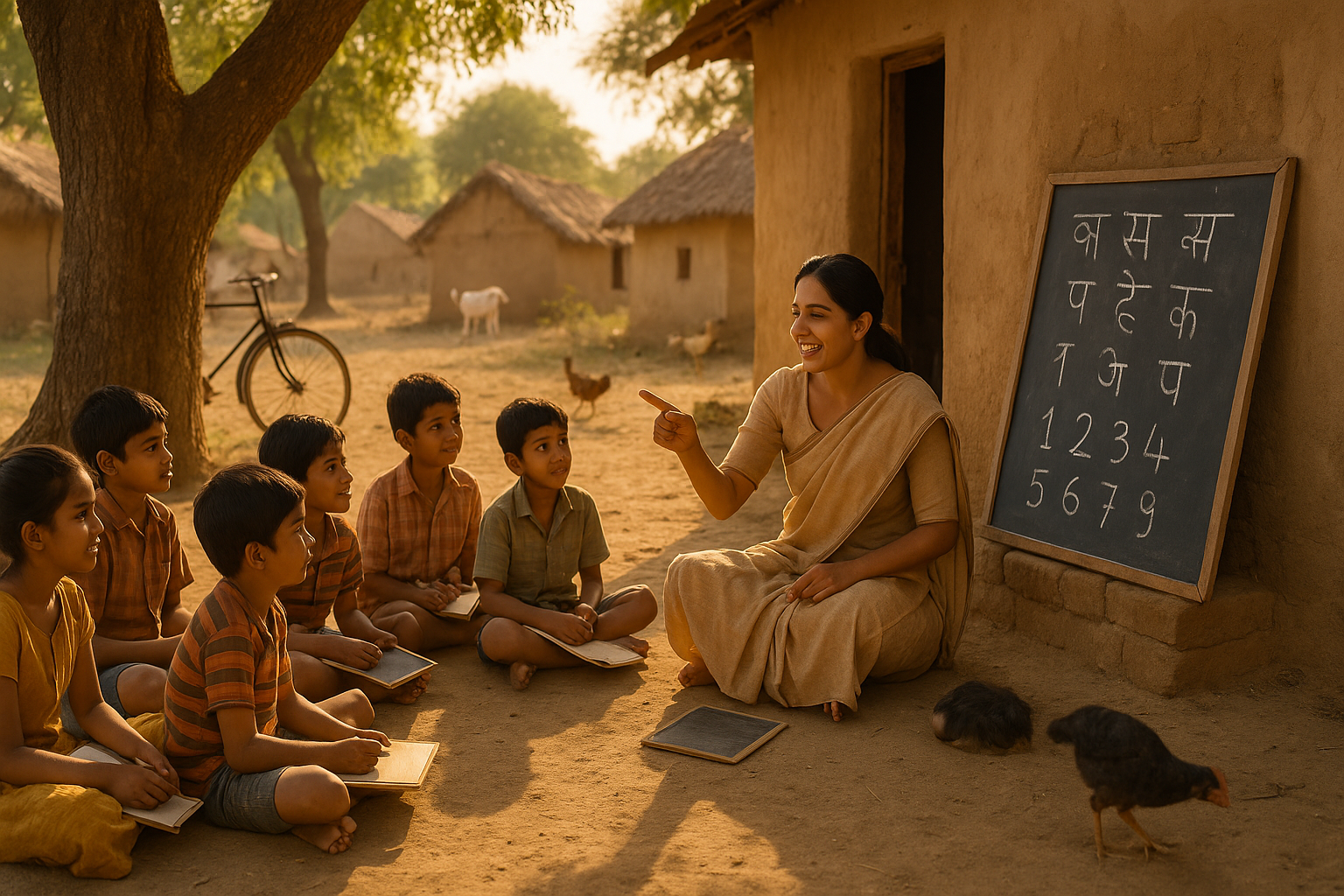
In many rural villages, formal education still faces major roadblocks — lack of infrastructure, long travel distances, teacher shortages, and economic challenges that force children to work instead of study. But in the face of these obstacles, community educators step in.
These are local individuals — often with basic training or high school education — who understand the culture, language, and struggles of their communities. They teach in small makeshift schools, under trees, or in donated rooms. But more importantly, they teach with heart.
💬 Education in the Language of the People
One of the biggest advantages of community educators is their deep connection with the local culture. They know the dialects. They understand the context. They teach not just ABCs but also values, life skills, and confidence — in a way that resonates.
In tribal areas or remote villages, where children often feel alienated by formal education systems, these educators are a bridge — between tradition and knowledge, between home and the wider world.
🙌 More Than Just Teachers
Community educators are often mentors, counselors, and role models. They convince parents to send their daughters to school. They fight child marriage and child labor through awareness. They track dropouts and help them return. In many cases, they teach without fixed salaries, driven only by a desire to uplift.
In doing so, they don’t just teach children — they transform communities.
💡 Real Stories, Real Impact
In Bihar, a young woman named Rani began teaching village children in her backyard with only a blackboard and borrowed books. Today, she runs a learning center with 50+ students. In Odisha, a retired farmer has turned part of his home into a study space, guiding kids each evening after work.
These aren’t isolated stories — they are a growing movement.
🛠️ How We Can Support Them
If India is to achieve true educational equity, community educators must be recognized and supported. NGOs and government initiatives can offer them:
-
Training and teaching resources
-
Small stipends or financial incentives
-
Access to digital tools and content
-
Opportunities for professional growth
Because when we invest in those who are already creating change at the grassroots, we accelerate progress where it’s needed most.
🌱 The Future Grows Locally
In the end, it’s not always the grand systems that spark transformation. Sometimes, it’s a young woman with a notebook, a passionate elder with a story, or a teenager tutoring younger kids in a dusty village square.
These local educators are shaping India’s future one child at a time — quietly, steadily, heroically.
Let’s recognize them. Support them. And tell their stories.